Introduction
When I think of vital global resources, I picture water, food, or maybe oil. Honestly, sand would never make the list. But strangely enough, modern life depends on it. Concrete and asphalt rely on sand, which means nearly every structure being built does too. In fact, around 90% of it goes into construction. When refined into silicon, sand is made into computer chips and solar panels. It shows up in glass, paint, filtration systems, and even cosmetics. In 2024, the United Nations Environment Program estimated that we use about 50 billion tons of sand and gravel each year, making it the second most extracted resource on Earth after water. The complication is that not all sand works the same way. Desert sand grains are too smooth to hold concrete together, so builders need sharper, water-eroded grains taken from rivers, coastlines, and seabeds instead. In many fast-growing countries such as Brazil, Morocco, India, and Vietnam, extraction is now happening faster than nature replaces it. The issue isn’t that sand is rare, but that the useful kind comes from fragile environments.
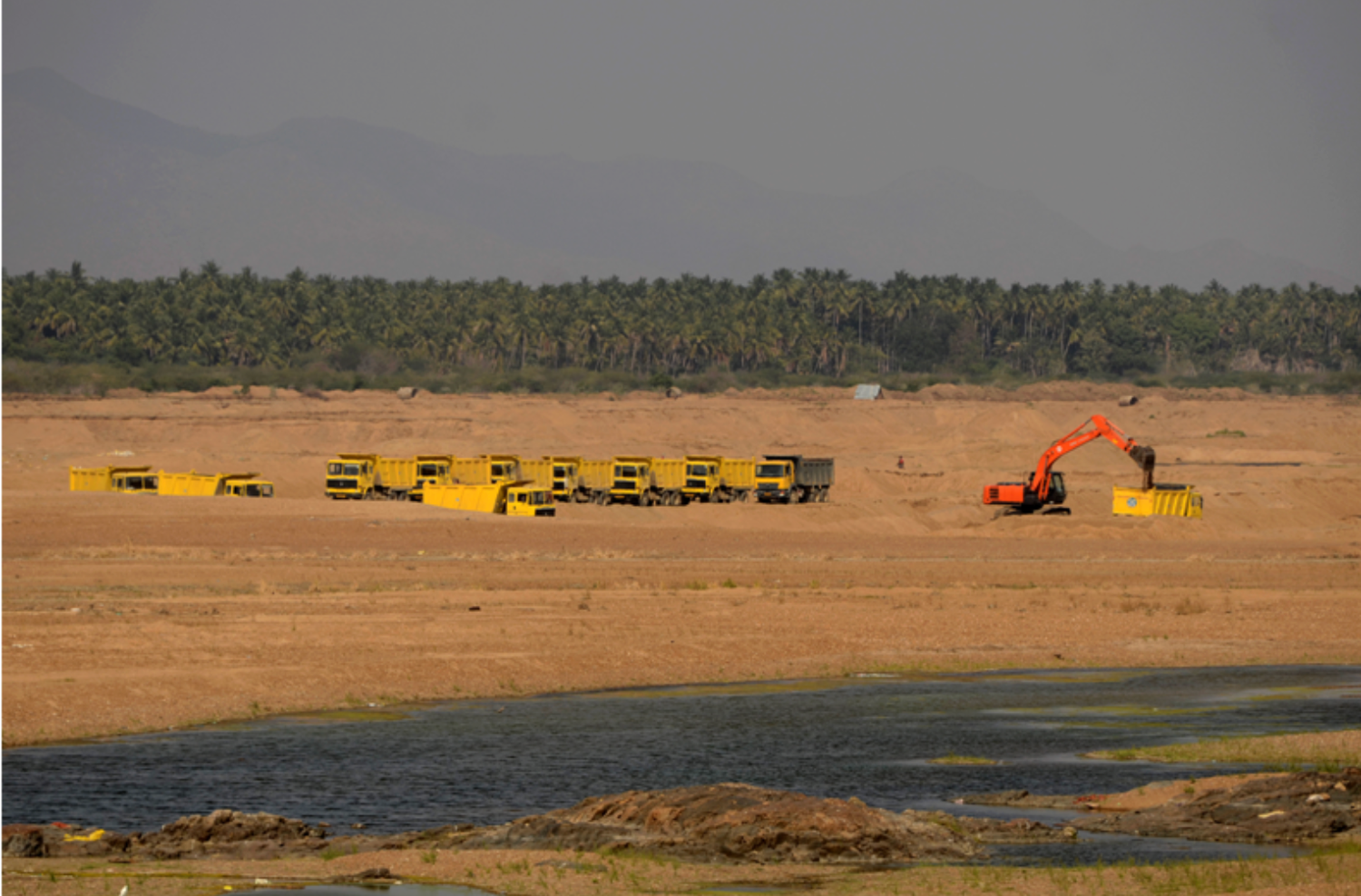
River sand mining in India. Photo by P. Jeganathan // Wikimedia Commons
Sand in the Global Market
Even though most sand is mined and distributed at a local level, it still forms a large global industry. The market was valued at roughly $151 billion in 2022 and is projected to pass $170 billion in the next few years as cities keep expanding. This demand reflects the fact that the world consumes over 50 billion metric tons of sand each year, more than the total sediment carried annually by all the world’s rivers combined. International trade itself is much smaller, around $4.5 billion annually, because transporting sand is expensive and most countries use domestic sources; for example, the United States imports only about 0.5% of the sand it consumes, while some countries rely more heavily on imports. Typically, only places that run out of nearby supply start importing. For example, Singapore relies on sand from Indonesia and Malaysia after running out of sand while working on land-reclamation and infrastructure projects. This mostly local demand creates a strange market. Sand usually exemplifies pretty elastic demand when construction development is low, as there're a lot of viable substitutes and not much need for extraction. The market gets complicated, however, when a region starts to grow faster than its surroundings can supply. Global cement production alone is expected to rise from 5.17 billion metric tons in 2020 to about 6.08 billion by 2026, and each cubic meter of cement requires nearly 1,900 kg of sand and gravel.
In these cases, which occur commonly in developing countries, construction slows, prices rise, and governments suddenly care about something as seemingly mundane as sand.
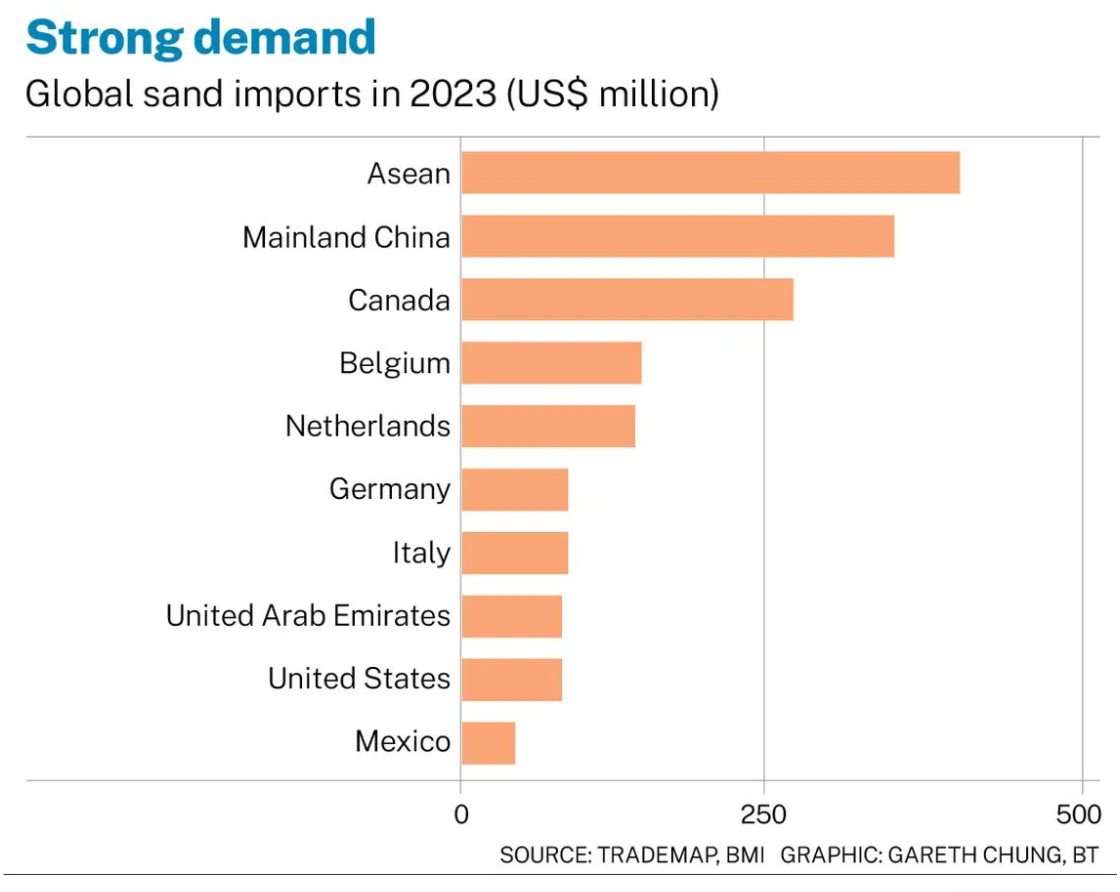
This chart shows the demand for sand imports globally in 2023. Typically, sand mining is a local enterprise, and countries without natural sand deposits have to bear hefty shipping costs for the material. Graphic courtesy of The Business Times.
Infrastructure and Climate Policy
Sand extraction can have grave environmental consequences. Construction of residential buildings, coastal defenses, and flood barriers require huge amounts of concrete, which increases pressure to mine rivers and shorelines. Modern dredging ships can remove up to 100,000 metric tons of marine sand per day, a scale that accelerates erosion, undermines bridges, and can even change river flow patterns. Researchers warn that removing sediment lowers riverbeds and destabilizes deltas, which increases flood risk and removes natural protection against storm surges. The part that I found odd about this is the almost paradoxical feedback loop. Governments build infrastructure to protect cities from climate damage, but the mining needed for that infrastructure weakens the protections that already existed. Demand for beach nourishment alone is expected to rise from about 80 million metric tons today to roughly 800 million metric tons by 2050, and countries such as Indonesia have reopened exports despite fisheries damage because construction demand keeps growing. In this sense, the environmental issue is less about running out of sand and more about regulating extraction so it does not disrupt systems that naturally keep water, soil, and storms in balance.
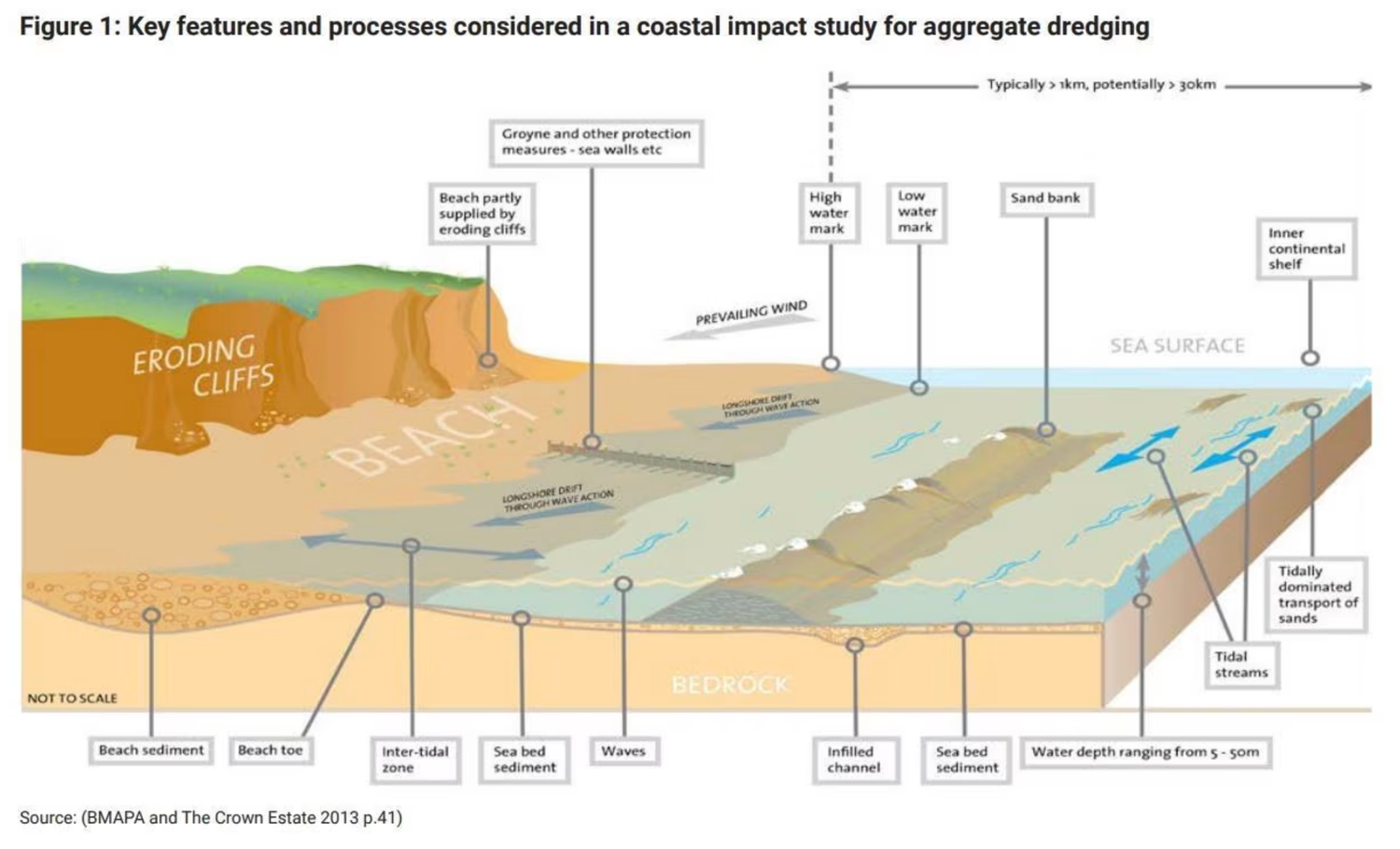
A diagram showing coastal features that naturally keep a beach in order. If impacted by sand mining, these natural protections are disrupted and lead to faster erosion of waterfront land, which poses a danger to coastal citizens and the environment. Graphic from UNEP.
What Are “Sand Mafias”?
As a result of the above-mentioned environmental concerns, governments have started to restrict extraction, but the demand for sand didn’t disappear. In many places, it just moved outside of legality. Estimates suggest only about 37.5% of sand mining worldwide is done legally, meaning that the other 62.5% is carried out by criminal mining networks called "sand mafias," notably operating across India, Southeast Asia, Morocco, and Mexico. India can show us what these syndicates can look like. After states limited river dredging to prevent erosion and flooding, illegal miners continued extracting sand without permits because construction demand remained high. In 2018, a police officer in Uttar Pradesh was killed confronting illegal miners, and journalists investigating the trade were attacked. In response, authorities created special monitoring units focused specifically on sand extraction. As recently as Feb. 13, 2026, police arrested 22 people for illegal mining from the Varahi River. At that point, the issue stops looking like environmental regulation and starts looking like organized crime tied directly to development pressure.
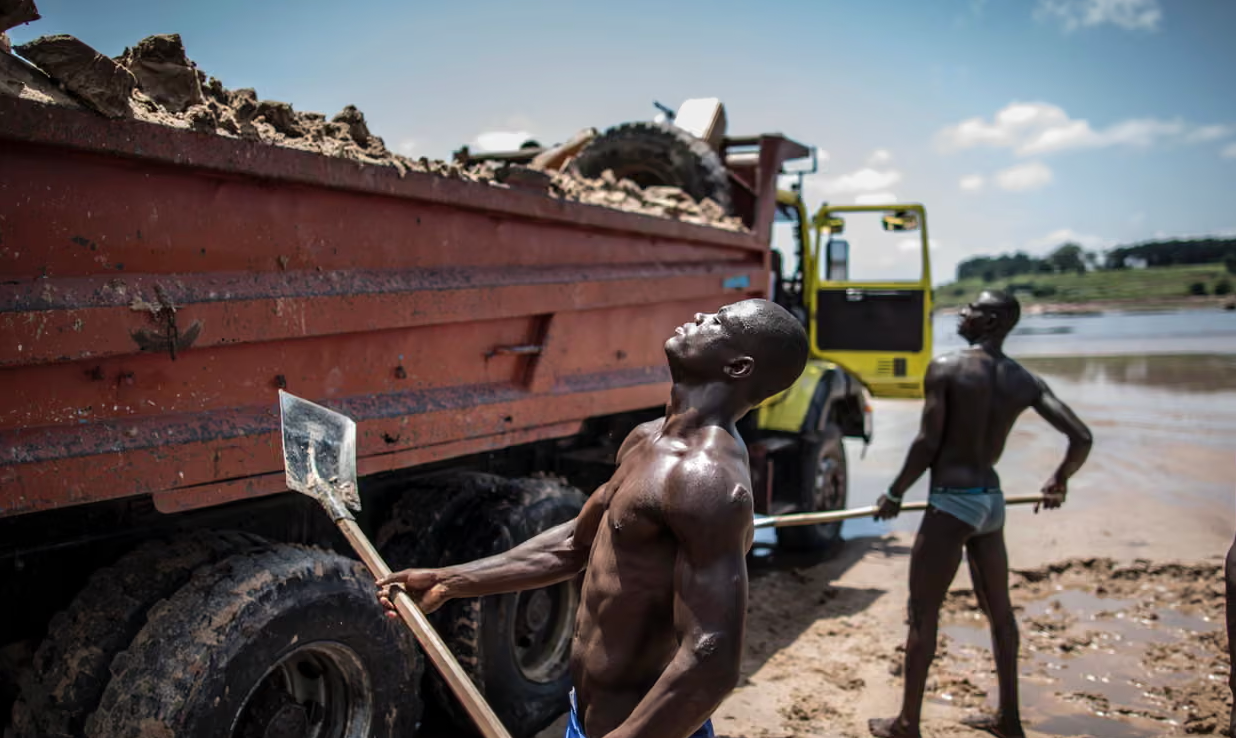
Sand diggers loading trucks at a quarry on the banks of the Congo river. Photo by Marco Longari // Getty Images
My Thoughts
Reading about this balance between development and sustainability concerns kept reminding me of author Akshat Rathi’s idea of “climate capitalism,” which is the argument that long-term economic stability eventually depends on investing in environmentally sustainable systems rather than just the cheapest immediate option. Concrete dominates construction materials largely because sand is locally available and inexpensive in the short term. But as we can see, the environmental costs and constant need for enforcement are pervasive in the long run. This makes me think that governments should treat building materials and urban infrastructure development as something worth actively steering rather than just letting markets choose the cheapest input (like we’ve seen some countries do with energy investments). Alternatives like recycled aggregates, engineered timber, and lower-cement concrete already exist but can rarely compete with conventional materials simply because of cost. Not everything needs to be made of concrete, and relying on it just because it is cheap and available may be creating risks that surface years later in infrastructure damage and environmental repair. If cities are going to keep expanding, investing early in different materials might end up being less about environmental idealism and more about avoiding future costs we already know are coming.
Leave a Comment!
Sources
Beiser, Vince. "He who controls the sand: the mining 'mafias' killing each other to build cities." The Guardian. https://www.theguardian.com/cities/2017/feb/28/sand-mafias-killing-each-other-build-cities.
Brown, Oli, and Pascal Peduzzi. "Driven to Extraction: Can Sand Mining be Sustainable?" Sustainability Accelerator (blog), May 30, 2019. https://accelerator.chathamhouse.org/article/driven-to-extraction-can-sand-mining-be-sustainable/.
Goldberg, Shelley, Charlene Rhinehart, and Kirsten Rohrs Schmitt. "Demand for Frac Sand and Concrete Drives Scarcity." Investopedia, September 30, 2022. https://www.investopedia.com/investing/demand-frac-sand-and-concrete-drives-scarcity/.
Pillai, Sharanya. "Asean's appetite for Indonesian sand could hit fisheries, marine life: BMI." The Business Times. Last modified March 18, 2025. https://www.businesstimes.com.sg/esg/eastspring-reviva-launch-coal-phase-out-strategy.
Simon, Randy. "Sand crime." WAMC Northeast Public Radio. Last modified January 2, 2026. https://www.wamc.org/show/earth-wise/2026-01-02/sand-crime.
The Times of India Editors. "21 from UP, a local held for illegal sand extraction." The Times of India. Last modified February 13, 2026.
