In early August, over 50 Democrat lawmakers left Texas in an attempt to stall an unprecedented redistricting bill. This bill, which would divide the Texas voting map to add 5 GOP seats, is a blatant example of gerrymandering. This isn’t unprecedented; however, partisan gerrymandering is an unfortunate, but fairly common practice, and is even thought to cancel at the national level. This new bill is flagrant not only because of its contents, but because of its timing.
Usually, states undergo redistricting at the turn of the decade, when new census numbers show how populations have changed. Texas, however, is trying to expedite this redistricting to give the GOP some cushion in the house, which they currently only lead by seven seats. This move is the first mid-decade redistricting attempt since Texas in 2003, and raises questions about the political ethics of breaking tradition and giving more power to an increasingly unpopular president in Trump.
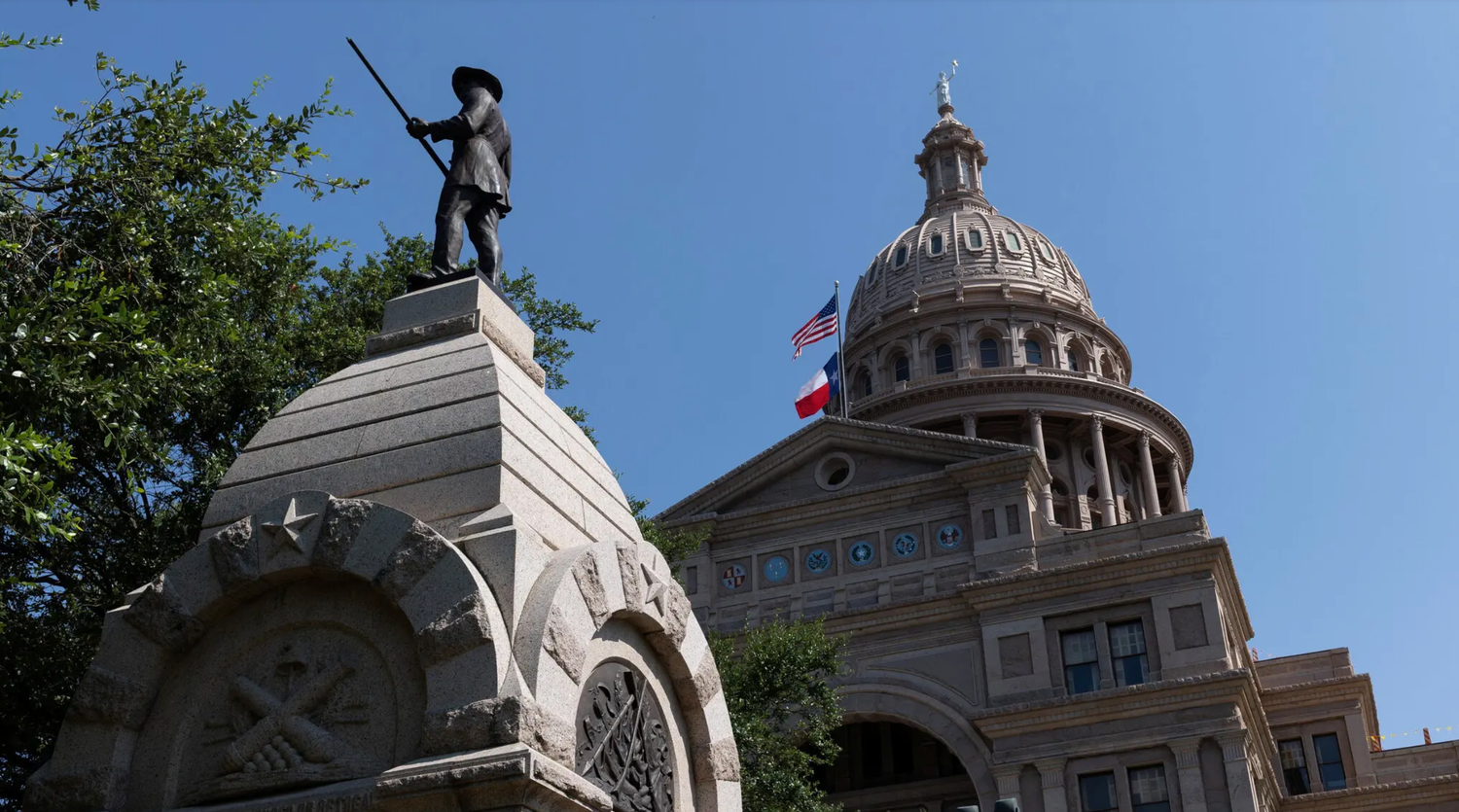
The Texas State Capitol in Austin. Photo Credit: Nuri Vallbona, Reuters
In protest of the bill, democrats fled Texas to deny lawmakers of the ⅔ quorum necessary in the Texas House. Denying quorum is not new to Texas politics, as it has been performed as recently as 2021. Aside from standout examples, like the 1979 “Killer Bees” quorum break, this gesture is usually more symbolic than legislatively effective. This 2025 break has succeeded in the symbolic measure, gathering nation-wide attention around the ethically-grey actions of the Texas GOP. Some people, like Texas governor Greg Abott, have been vehemently against this quorum break, saying in a public statement that “real Texans do not run from a fight. But that’s exactly what most of the Texas House Democrats just did.” The governor has even threatened to issue warrants for the arrest of the lawmakers, in an unconstitutional and highly illegal attempt to force Democrats into a rigged game. If real Texans don’t run from a fight, then real Texans also don’t shrink from standing up for fair representation.
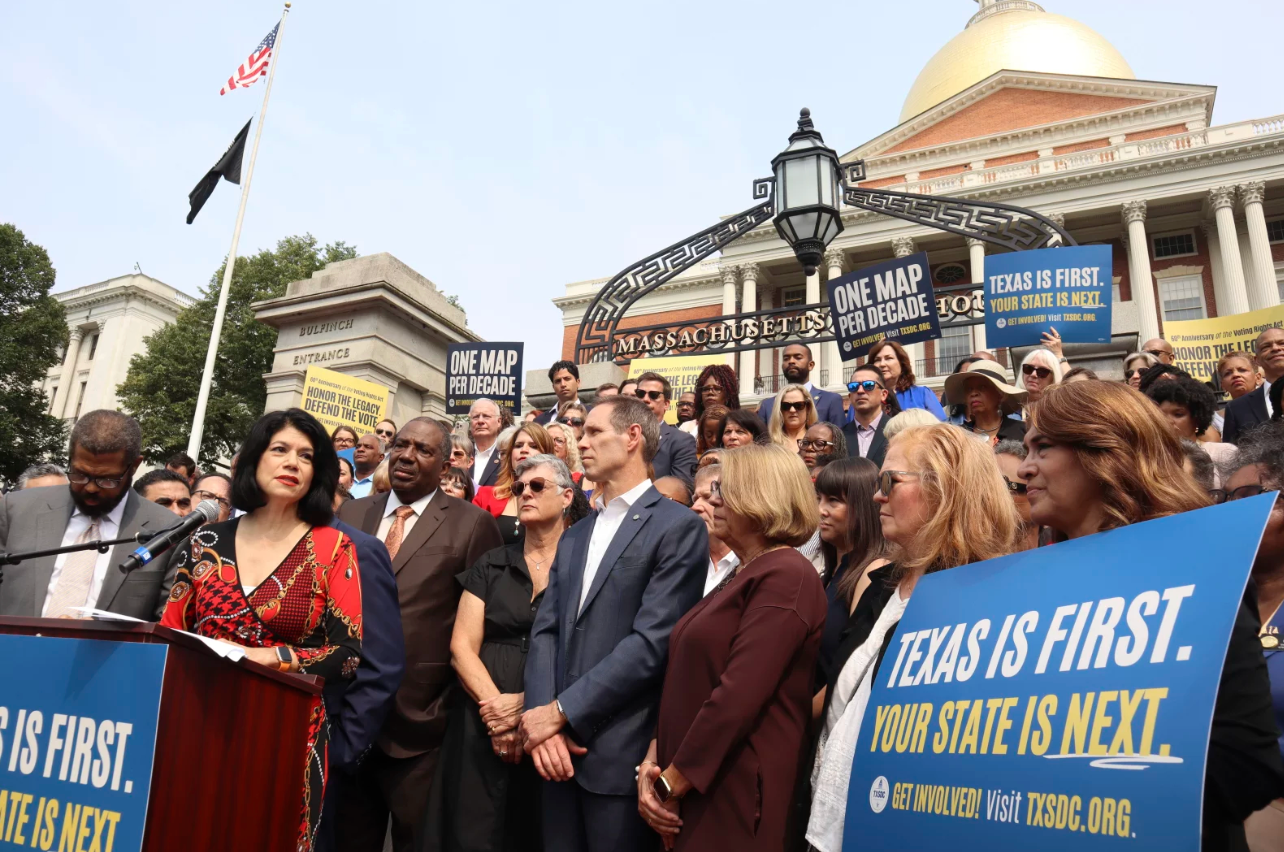
Texas state Senator Carol Alvarado (D) speaks on the steps of the MA State House on Aug. 6. Photo Credit: Leah Willingham, AP
From the other side of the aisle, the most outspoken critic of Texas’s actions has been California Governor Gavin Newsom. Newsom is breaking the traditional Democrat practice of “when they go low, we go higher,” and instead, going even lower. His new “Election Rigging Response Act” aims to fight fire with fire, presenting a new legislative package that would temporarily override CA’s independent redistricting commission and add five Democrat-leaning districts to the CA map.
In a wave of hypocrisy, local and national Republicans have pushed back against this attempt to even the playing field. Speaker of the House Mike Johnson has deemed Newsom’s move an “illegal power grab,” but has failed to label the Texas GOP’s bill similarly, a double standard that highlights the GOP’s willingness to weaponize the rules only when it benefits them. When Republicans redraw maps mid-decade in Texas, it’s framed as protecting democracy, but when Democrats respond in California, it’s suddenly a constitutional crisis.

Gov. Newsom speaks in Los Angeles on Aug. 14th. Photo Credit: Marcio Jose Sanchez, AP
Newsom has continued his “fire with fire” approach by tweeting in a similar manner to Trump. Republicans have been quick to denounce him as unprofessional and immature, yet don’t bat an eye at what the President churns out on a daily basis. This isn’t really relevant to the Quorum breaking, but I thought it was funny.

I held off on posting this blog a few days ago because this story is still unfolding rapidly, and new updates are coming in every day. That proved to be a wise decision because as of August 18th, Texas Democrats have restored quorum.
The restored quorum in Texas suggests that the GOP’s redistricting bill is now likely to move forward, setting a precedent that could embolden similar maneuvers in other states. Such actions threaten to erode the fairness of representation and chip away at public trust in the electoral process. As more states watch these battles unfold, it’s easy to imagine a domino effect, where procedural rules are exploited whenever it benefits those in power. At what point do we, as a nation, draw the line between legal strategy and the systematic manipulation of voters’ voices? If we have learned anything from the GOP’s actions so far, the answer is never.
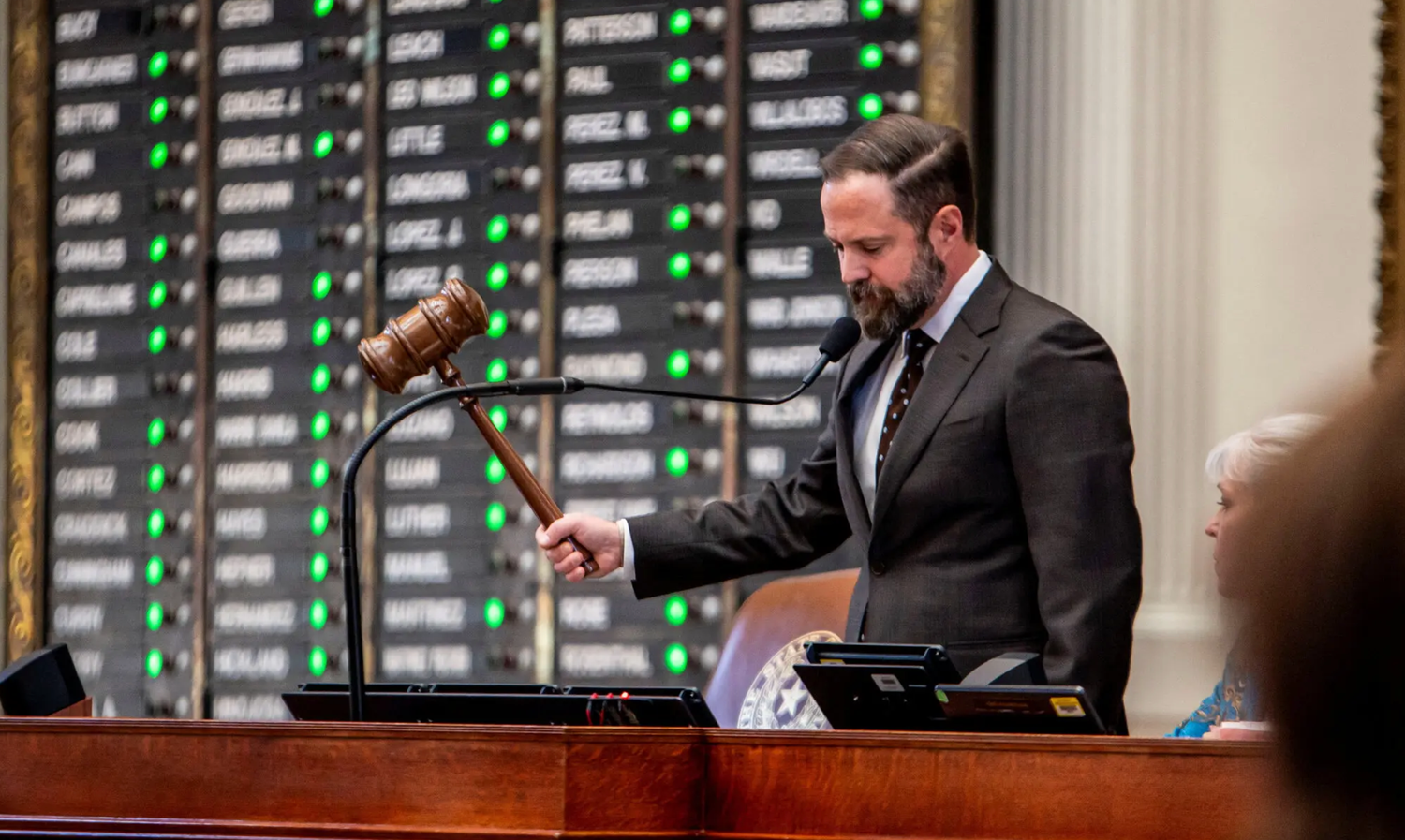
Speaker of the TX state House confirms quorum with an abnormally large gavel. Photo credit: Sergio Flores, Reuters
Sources
Texas Democrats have returned home, ending redistricting standoff, Liz Crampton, Politico, 8/18/25
The fight is on. How redistricting could unfold in 8 entangled states, The NPR Network, 8/14/25
There Is No Legal Basis for the FBI To Arrest Quorum-Breaking Texas Legislators, Devin Ombres, CAP, 8/7/25
Denying quorum has been a Texas political strategy since 1870, Hayden Betts, The Texas Tribune, 8/3/25
A look at Texas’ redistricting walkout and California’s response, by the numbers, John Hanna, AP, 8/18/25
Texas Democrats End Walkout, Ensuring GOP Redistricting Plans Will Pass, Elizabeth Findell & Gareth Vipers, WSJ, 8/18/25
Partisan Gerrymandering Mostly Cancels Out at National Level, Study Shows, Rick Harrison, Yale ISPS, 6/13/23
Trump approval holds at 40%, lowest level of his term, Reuters/Ipsos poll finds, Jason Lange, Reuters, Updated 8/18/25
Newsom vows to ‘meet fire with fire’ as he brings California into Texas redistricting war with Trump and Republicans, Eric Garcia, The Independent, 8/14/25
Texas Democrats End Walkout, Allowing Redrawn Map to Pass, J. David Goodman, NYT, 8/18/2025
Texas Redistricting Fight: Is Any of This Legal?, Mattathias Schwartz & J. David Goodman, NYT, 8/8/2025
