Introduction
We’re a few weeks out from spring break, and I’m jealous. I keep catching wind of the incredible trips that my classmates have planned for these next few weeks. Inspired, I started to plan my own trip for summer. First things first, I tried to renew my passport. I assumed it would be straightforward. It wasn’t. The appointment system was confusing, processing times were unpredictable, and there was always the possibility that something small could delay everything. The whole process felt inefficient for something that seems so necessary. But at the same time, it made me realize that for me, a US Citizen, this inconvenience is temporary. Once I'm done with the whole process, I can travel to most places in the world without thinking too much about it. I now know, however, that isn’t the case for everyone.
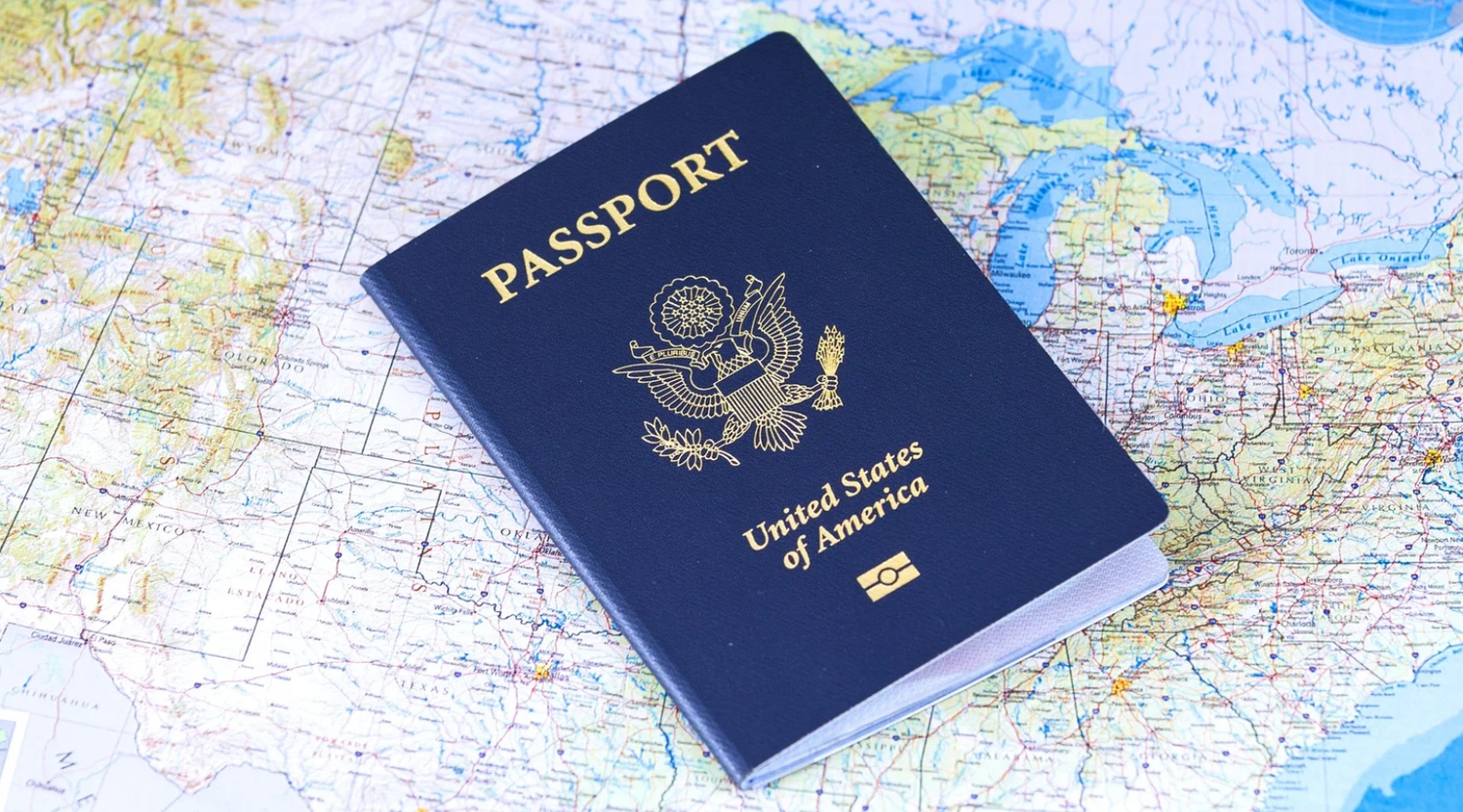
The US Passport ranks tenth on the Henley Passport Index, allowing visa-free access to 179 countries. Image courtesy of Getty Stock
Understanding Passports in the Global System
When I think about inequality between countries, I usually think about income or access to education, not passports. Passports, however, determine where people are allowed to go, and thus the opportunities they have access to. The Henley Passport Index, a ranking of passports based on how many destinations they allow visa-free access to, demonstrates the disparities between the travel opportunities available to citizens around the globe. In 2026, the strongest passports, like those of Singapore, Japan, or the United Arab Emirates, allow access to around 190 countries, while the weakest, like those of Afghanistan and Iraq, allow access to fewer than 30. This gap affects things like who can study abroad, who can take certain jobs, and who can leave during crises. Even though global mobility has increased over time, researchers note that inequality in mobility has increased as well. Citizens of wealthier countries have gained more access at a faster rate than those from poorer countries. In other words, the gap isn’t closing, but rather drifting further apart.
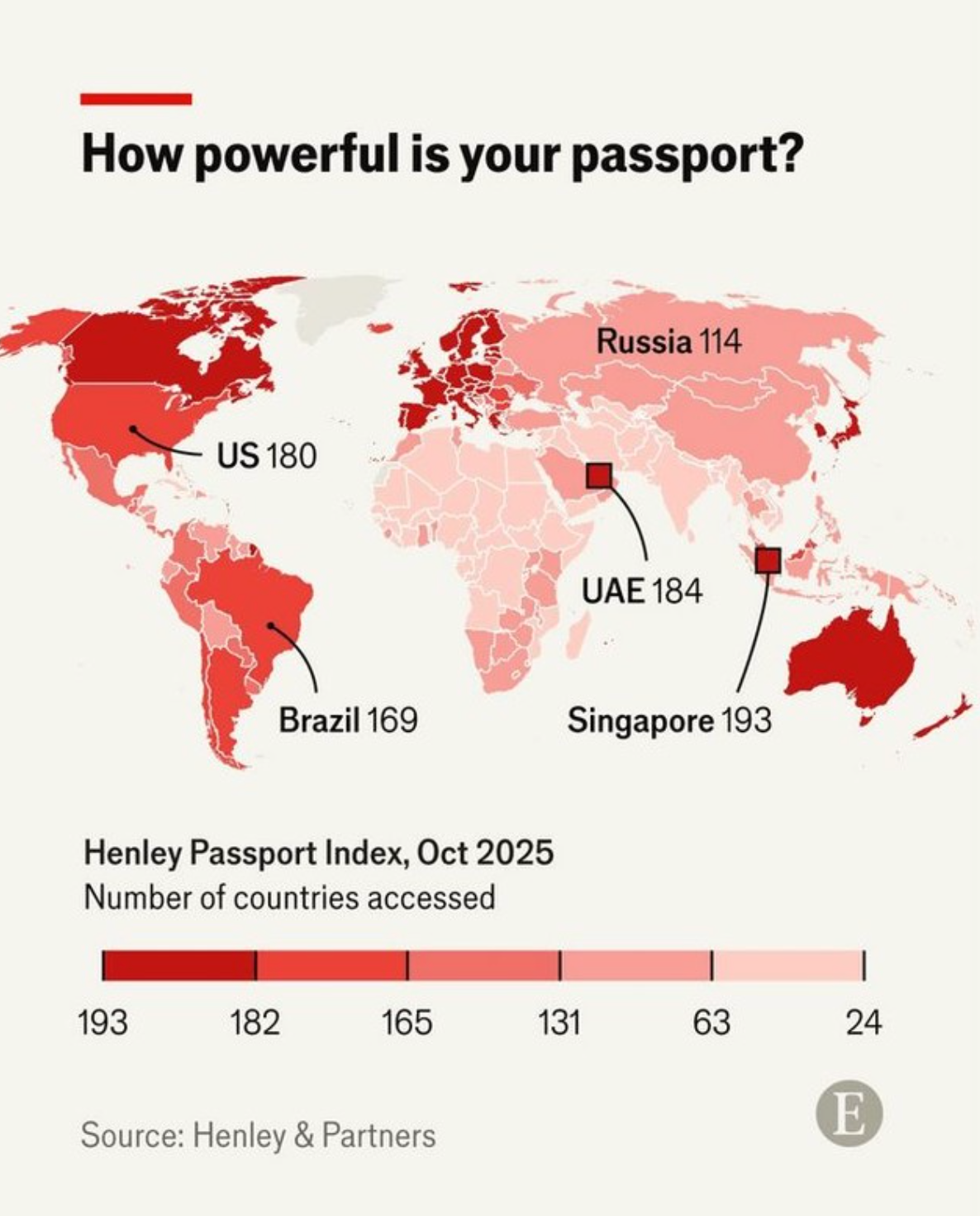
This map shows the number of countries accessible with certain passports. Image Courtesy of The Economist
Patterns and Disparities
A large part of this inequality comes down to how countries manage borders and weigh risk. Wealthier countries tend to have more visa agreements with each other, as it allows for a freer exchange of ideas, goods, and services, while countries facing economic instability or conflict often face stricter entry requirements, as their global neighbors are concerned with things like irregular migration, security risks, and the economic pressures that large inflows of tourists/migrants can place on labor markets and public services. According to data summarized by Henley Global, for example, G7 countries collectively allow visa-free access to a large majority of the world, while many countries in the Global South remain heavily restricted. These restrictions show up in everyday situations. A student from Germany can often decide to study abroad with relatively few barriers. A student from Afghanistan or Nigeria might face high visa costs, long processing times, and a significant risk of rejection, even if they meet all formal requirements.
Why it Matters
More importantly than just travel or tourism, global mobility affects access to education, labor markets, and citizens’ safety. The ability to freely leave a country quickly can determine whether someone can avoid conflict or economic collapse. For example, when Russia invaded Ukraine (ranked #28 on the Henley Index) in 2022, millions of Ukrainians were able to quickly flee into neighboring countries like Poland, Romania, and Hungary. Because Ukraine had visa-free travel agreements with the European Union, refugees were able to safely and quickly cross the border and then later receive temporary protection that allowed them to work, study, and access social services across much of Europe. On the other hand, people fleeing the Syrian Civil War faced strict visa requirements and closed borders. Syria ranks second to last on the Henley Index. As a result, many Syrians trying to reach safety were forced to take dangerous routes, while countries like Lebanon and Jordan struggled to process the influx of asylum seekers. These contrasting examples demonstrate how visa restrictions can actively contribute to maintaining global inequality. I feel immense privilege when I realize that while passports are a minor, though admittedly frustrating, inconvenience for me, for others, they could determine whether they’re able to flee a potentially life-altering situation.
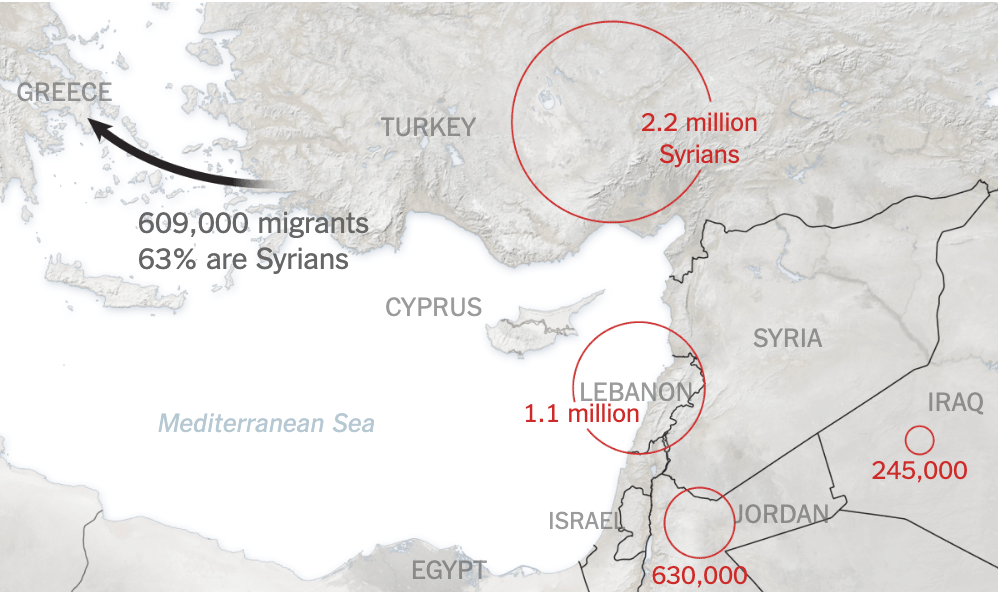
The Syrian refugee crisis placed immediate pressure on neighboring countries such as Lebanon and Jordan, while later also straining entry systems in European countries like Greece as they processed large numbers of asylum seekers and border arrivals. Image courtesy of The New York Times.
Sources
Amnesty International Editors. "Fortress Europe: Syrian refugee shame exposed." Amnesty International, December 12, 2013. https://www.amnesty.org/en/latest/press-release/2013/12/fortress-europe-syrian-refugee-shame-exposed/.
Council of the European Union. "How the EU helps refugees from Ukraine." Consilium Europa. Last modified March 25, 2026. https://www.consilium.europa.eu/en/policies/ukraine-solidarity-refugee-from-ukraine/.
Henley & Partners. "The Henley Passport Index." The Henley Passport Index. Last modified 2026. https://www.henleyglobal.com/passport-index/ranking.
Madden, Duncan. "Growing Divide In Passport Power Is Reshaping Global Mobility In 2026." Forbes, January 13, 2026. https://www.forbes.com/sites/duncanmadden/2026/01/13/growing-divide-in-passport-power-is-reshaping-global-mobility-in-2026/.
Neumayer, Eric. "Unequal Access to Foreign Spaces: How States Use Visa Restrictions to Regulate Mobility in a Globalized World." Transactions of the Institute of British Geographers 31, no. 1 (2006). https://doi.org/10.1111/j.1475-5661.2006.00194.x.
